Cloud & DevOps
Infrastructure and Delivery, Unified
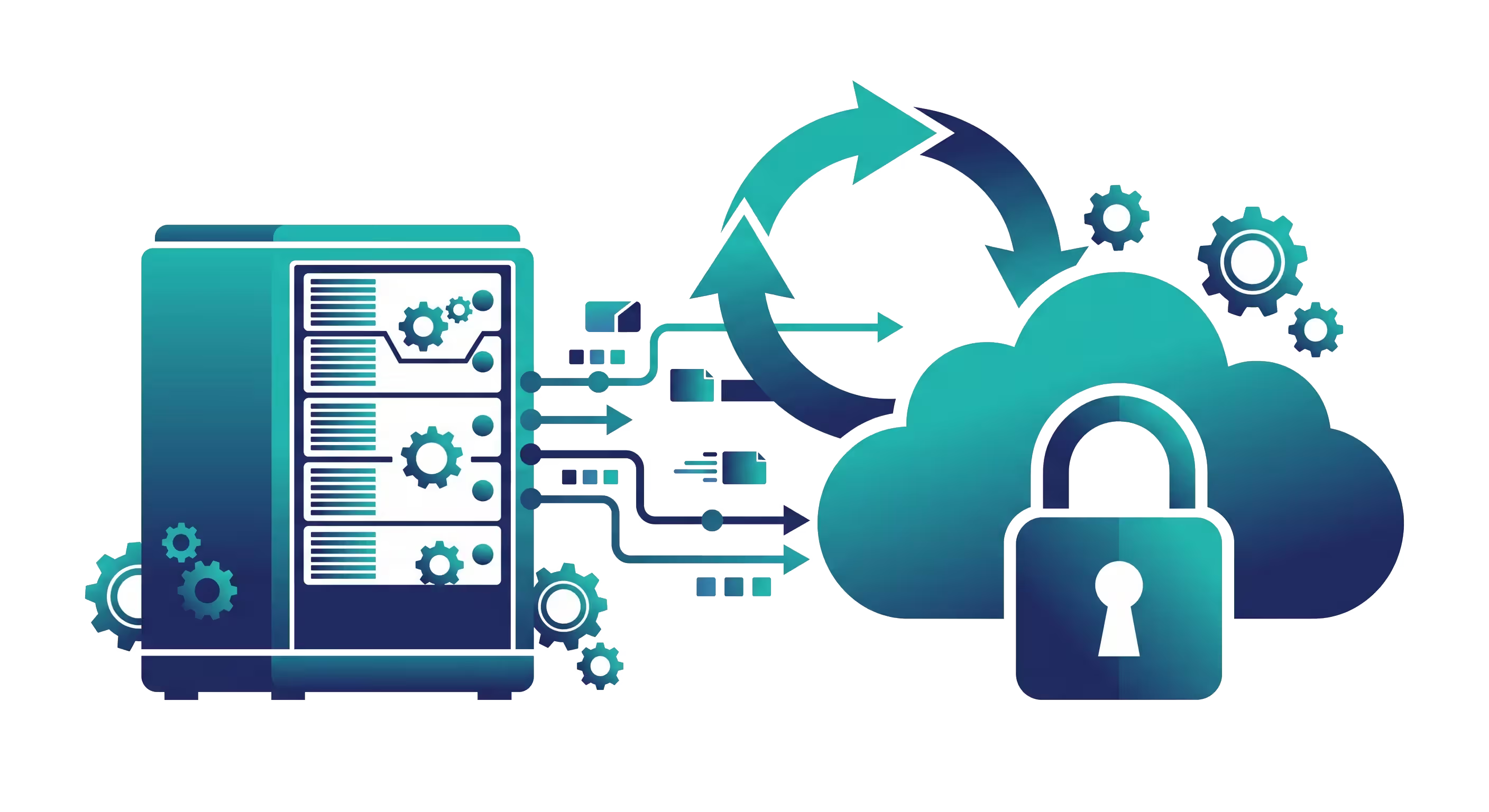
Cloud infrastructure and deployment pipelines are usually solved by two different vendors who don't talk to each other. We deliver both as one coherent system, secure infrastructure and the automated delivery pipeline that ships to it.
Service Overview
Everything you need to know about how this engagement creates value for your organization.
What is it?
A unified cloud infrastructure and delivery pipeline (hosting, scaling, security, and automated deployment) designed and run as one coherent system.
Who needs it?
Growing engineering teams whose infrastructure and deployment process were bolted together over time by different people, with no single coherent design.
Business Value
Removes the coordination gap between infrastructure and deployment, so releases are fast and infrastructure is stable, without one team's fix breaking the other's setup.
Key Benefits
- Infrastructure and deployment pipeline designed as one system
- Automated, secure infrastructure that scales with real demand
- Faster, lower-risk delivery through unified CI/CD pipelines
- One team accountable for both the platform and how code reaches it
Why Do Disjointed Infrastructure and Delivery Create Friction Nobody Owns?
Most engineering teams end up with infrastructure and deployment tooling that were set up separately over time, and neither piece was designed with the other in mind.
Infrastructure changes break the deployment pipeline
A server or network change made without deployment tooling in mind quietly breaks the release process, and nobody notices until the next deploy fails.
Nobody owns the whole system end to end
Infrastructure and CI/CD get managed by different people or vendors, so a cross-cutting problem falls into a gap nobody's specifically responsible for.
Cost and reliability trade-offs are made in isolation
Infrastructure decisions made without deployment frequency in mind, or pipeline decisions made without infrastructure cost in mind, lead to a system that's neither efficient nor reliable.
Security gaps fall between the cracks
Infrastructure security and pipeline security are often each other's blind spot, leaving an access control or secrets-management gap that neither side is watching.
Scaling the team means scaling the confusion
As more engineers touch either infrastructure or deployment without a unified design, the system becomes harder to reason about and slower to change safely.
What Does a Unified Cloud & DevOps Approach Actually Change?
Designing infrastructure and delivery together (not as two separate projects) changes how reliably and quickly your team can ship.
Infrastructure and pipeline changes stay in sync
A single coherent design means a change on one side accounts for its effect on the other, eliminating the breakage that used to happen at the seams.
One team is accountable for the whole system
Cross-cutting problems get resolved by a team that understands both infrastructure and delivery, instead of falling into a gap between vendors.
Cost and reliability get optimized together
Infrastructure sizing and deployment frequency are planned as one trade-off, avoiding the waste of decisions made in isolation.
Security is designed across the whole system
Access control, secrets management, and infrastructure hardening are handled as one continuous responsibility, not two separate blind spots.
Where Does the Return Actually Come From?
A unified approach pays back in fewer cross-system incidents, lower total infrastructure cost, and engineering time no longer spent untangling two disconnected setups.
Fewer deployment-breaking incidents. A coherent design prevents the seam failures that occur when infrastructure and pipeline are managed separately.
Lower total infrastructure spend. Cost and reliability trade-offs planned together avoid the waste of isolated, uncoordinated decisions.
Faster incident resolution. One team accountable for the whole system resolves cross-cutting issues faster than two separate vendors handing off blame.
Reduced security exposure. Unified access control and secrets management close the gaps that fall between infrastructure and pipeline ownership.
More engineering time spent building product. Less time is lost reconciling two systems that were never designed to work together.
How Does the Engagement Actually Run?
The same disciplined process behind every project, applied to this one.
Current State Assessment
We assess your existing infrastructure and deployment tooling together, mapping where the two currently create friction.
Unified Architecture Design
We design infrastructure and CI/CD as one coherent system, sized and secured with both sides in mind from the start.
Implementation in Stages
We roll out the unified design incrementally, starting with the highest-friction seam between infrastructure and delivery.
Monitoring & Security Hardening
We implement monitoring and security controls across the whole system, closing the gaps that used to fall between teams.
Handoff & Ongoing Management
We document the unified system and train your team, or continue managing it, so it stays coherent as it evolves.
What Actually Happens During the Engagement
No black box. Here's what you're involved in, and what you're handed at the end.
- A documented assessment of current infrastructure and deployment friction points
- A unified architecture covering both hosting and delivery pipeline design
- Infrastructure as code and CI/CD pipelines configured to work together
- Cross-system monitoring, alerting, and security controls
- Cost and reliability trade-offs documented and optimized jointly
- Full documentation and training for ongoing team ownership
What's a Realistic Timeline?
Scoped ranges, not vague promises. The exact plan is confirmed after discovery.
Assessment
1 weekJoint audit of infrastructure and deployment friction points.
Architecture Design
1–2 weeksUnified infrastructure and pipeline design.
Implementation
3–6 weeksStaged rollout of the unified system.
Handoff
1 weekDocumentation, training, and transition to ongoing ownership.
What Technology Is Behind It?
We pick the right tool for the outcome, not the newest one for its own sake.
Cloud Platforms
Delivery
Operations
What Results Have We Delivered in Cloud & DevOps?
Real outcomes from cloud & devops engagements, not manufactured claims.
A scaling e-commerce platform
Infrastructure was managed by one contractor and the deployment pipeline by another, with releases regularly breaking due to infrastructure changes neither side had visibility into.
We took over both infrastructure and deployment as a single unified system, redesigning the CI/CD pipeline and hosting architecture together.
Deployment-breaking incidents caused by infrastructure changes have stopped, and one team now owns the full system end to end instead of two disconnected vendors handing off blame.
Paired Services
Capabilities that pair naturally with this one.
Other Solutions
Purpose-built systems that solve adjacent problems.
Who This Is Built For
See how this looks in practice for a specific industry.
Questions About Cloud & DevOps
The practical details behind how we deliver this specific service.
Yes. This is a common starting point. We assess the existing setup from both sides and typically consolidate ownership so the seam that was causing friction disappears.
Ready to Stop Managing Infrastructure and Delivery Separately?
Tell us where the friction shows up between your infrastructure and your releases. We'll show you what a unified system fixes.