Digital Transformation
Modernize Without the Disruption
Legacy systems don't fail all at once. They fail quietly, one manual workaround at a time, until the whole operation is held together by institutional memory. We modernize the core of the business without stopping it mid-operation.
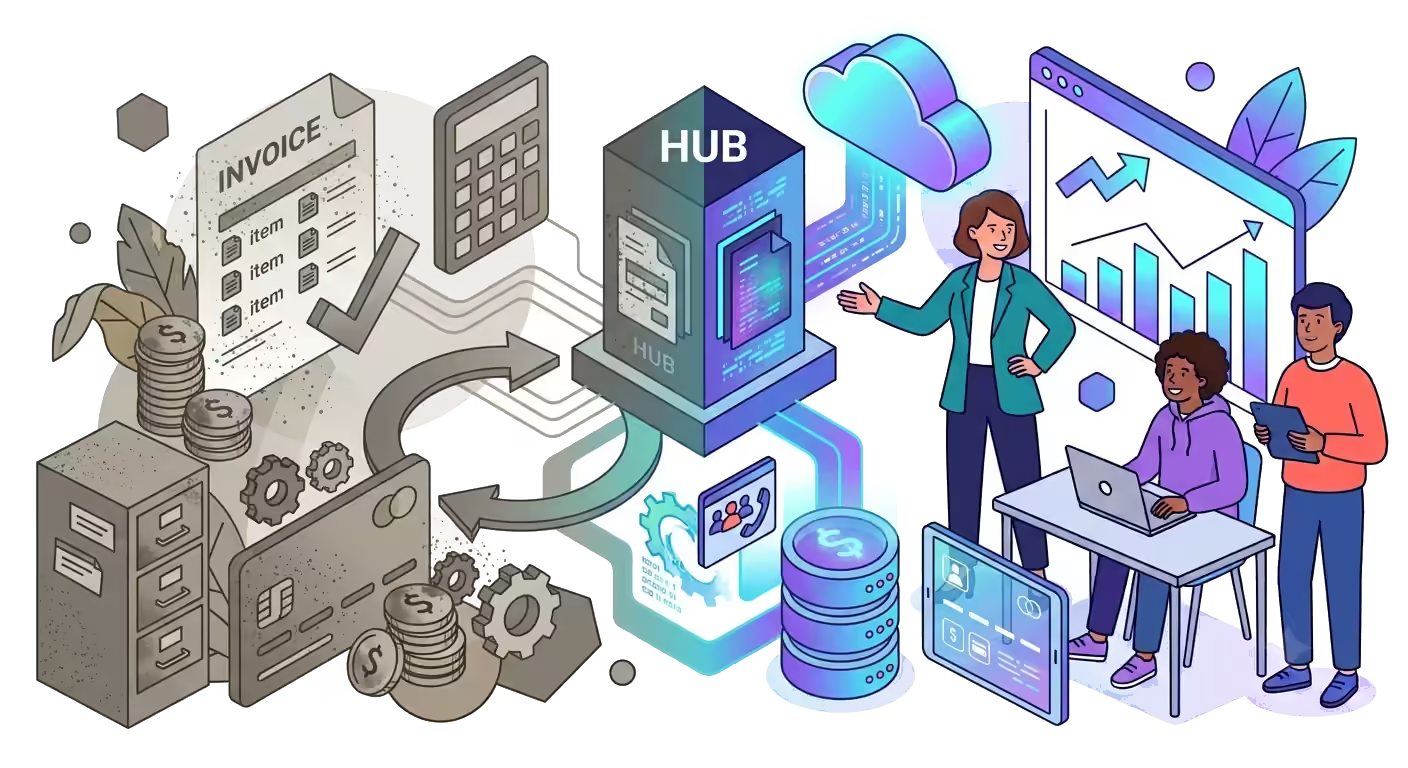
Service Overview
Everything you need to know about how this engagement creates value for your organization.
What is it?
A structured modernization of the systems and processes your operations actually run on, replacing fragmented tools with one coherent digital layer.
Who needs it?
Established businesses whose operations have grown faster than their systems, leaving departments running on disconnected spreadsheets, legacy software, and manual handoffs.
Business Value
Converts scattered, aging operational tooling into a unified system that reduces manual work, cuts licensing waste, and gives leadership one accurate picture of the business.
Key Benefits
- One unified system replacing years of accumulated point solutions
- Reduced dependency on manual processes and institutional memory
- A phased modernization path with no disruptive all-at-once cutover
- Leadership visibility into operations that were previously siloed
Why Are Legacy Operations Quietly Capping What's Possible?
Most businesses don't decide to run on fragmented systems. It happens gradually, one urgent fix at a time, until modernizing feels too risky to attempt.
Every department runs its own disconnected system
Finance, operations, and sales each rely on separate tools that were never designed to share data, forcing manual reconciliation for even simple cross-team questions.
Institutional memory is doing the job software should
Critical processes work only because one or two long-tenured staff know the workarounds, a single departure away from a serious operational gap.
Leadership can't get a single accurate picture
Reporting means pulling numbers from five different systems and reconciling them by hand, so decisions are made on data that's already a week stale.
Legacy software is a growing security and support risk
Systems built years ago on outdated technology become harder to secure, patch, or find support for, quietly increasing risk with each year they remain unaddressed.
Modernization feels too risky to start
The fear of a disruptive, all-at-once replacement keeps businesses running on aging systems long after the case for change is obvious.
Competitors are moving faster on less friction
A leaner, more digitized competitor can respond to market changes in days, while fragmented systems keep your business reacting in weeks.
What a Structured Transformation Actually Changes?
Digital transformation done in phases changes how the business runs day to day, not just the technology underneath it.
Departments finally share one source of truth
A unified system replaces the reconciliation work between disconnected tools, so every team is working from the same accurate data.
Operations stop depending on any one person
Processes get encoded into the system itself, so institutional knowledge becomes documented workflow instead of a risk tied to one employee.
Licensing and maintenance costs consolidate
Replacing a patchwork of point solutions with a unified platform typically reduces the total software spend, not just the operational friction.
Leadership gets real-time visibility
Dashboards pulling from one unified system replace the manual, stale reporting that used to take days to assemble.
Where Does the Return Actually Come From?
Transformation's return shows up in reduced manual reconciliation hours, consolidated software spend, and decisions made on current data instead of week-old numbers.
Fewer reconciliation hours. A unified data layer removes the manual cross-checking that fragmented systems currently require.
Lower total software cost. Consolidating point solutions into one platform typically reduces combined licensing spend.
Reduced key-person risk. Documented, system-encoded processes stop depending on any single employee's institutional knowledge.
Faster, more confident decisions. Real-time dashboards replace reporting that used to take days to manually assemble.
Lower long-term security risk. Retiring unsupported legacy software removes a growing and often invisible liability.
How Does the Engagement Actually Run?
The same disciplined process behind every project, applied to this one.
Operational & Systems Audit
We map every system currently in use, how data moves between them, and where the manual gaps actually are.
Phased Transformation Roadmap
We design a staged modernization plan that prioritizes the highest-friction gaps first, so value shows up early, not only at the end.
System Consolidation & Build
We build or integrate the unified systems needed, migrating data carefully at each phase rather than in one high-risk cutover.
Change Management & Training
We support your team through the transition with training and documentation, since a modernization only works if people actually adopt it.
Continuous Optimization
After each phase, we review real usage and refine the system, treating transformation as an ongoing process rather than a single project.
What Actually Happens During the Transformation
No black box. Here's what you're involved in, and what a phased modernization actually looks like.
- A documented map of current systems, data flows, and manual gaps before any change is proposed
- A phased roadmap that prioritizes the highest-impact gaps first
- Staged data migration with validation at every step, not a single risky cutover
- Change management support and staff training for each phase
- Unified reporting dashboards built on consolidated data
- A documented, extensible system your team owns going forward
What's a Realistic Timeline?
Scoped ranges, not vague promises. The exact plan is confirmed after discovery.
Audit & Roadmap
2–3 weeksFull systems audit and a prioritized, phased transformation plan.
Phase One Build
4–8 weeksThe highest-impact system consolidation, built and rolled out first.
Subsequent Phases
OngoingAdditional phases executed on the agreed roadmap timeline.
Optimization
OngoingContinuous review and refinement based on real usage data.
What Technology Is Behind It?
We pick the right tool for the outcome, not the newest one for its own sake.
Integration
Core Systems
Infrastructure
What Results Have We Delivered in Digital Transformation?
Real outcomes from digital transformation engagements, not manufactured claims.
A multi-branch distribution business
Each branch tracked inventory and sales in its own spreadsheet, with head office reconciling numbers manually every month and no real-time view of stock across locations.
We ran a phased transformation, starting with a unified inventory system across branches, then layering in centralized sales reporting and finance integration.
Head office now has real-time visibility across every branch, monthly manual reconciliation has been eliminated, and each phase shipped without disrupting daily branch operations.
Paired Services
Capabilities that pair naturally with this one.
Other Solutions
Purpose-built systems that solve adjacent problems.
Who This Is Built For
See how this looks in practice for a specific industry.
Questions About Digital Transformation
The practical details behind how we deliver this specific service.
We deliberately phase the rollout so each stage is validated before the next begins. The goal is modernization without a disruptive all-at-once cutover.
Ready to Modernize Without Stopping the Business?
Tell us where your systems feel most fragmented. We'll show you exactly what a phased transformation would prioritize first.